United in Peace: Why Restoring Trust Matters in Today’s World
In today’s interconnected yet divided world, one of the greatest challenges we face is the erosion of trust. Trust between communities, between citizens and governments, and even between generations is being strained by polarization, misinformation, and rising intolerance. Without trust, societies struggle to cooperate, progress stalls, and divisions deepen. Restoring it is not just a moral imperative—it is the foundation for peace and sustainable development.
The Growing Crisis of Mistrust
Across the globe, we see how mistrust fuels conflict and fragmentation. Political polarization weakens democratic systems. Communities turn inward when faced with cultural or religious differences. Generational divides widen as young people feel excluded from decision-making processes. Digital spaces, once imagined as connectors, are increasingly breeding grounds for disinformation and suspicion.
This crisis undermines social cohesion and makes it harder to address urgent global challenges—from climate change to inequality—that require collective action.
The Power of Intercultural Dialogue
One proven pathway to rebuilding trust is intercultural dialogue. When people from different backgrounds come together to share experiences, listen to one another, and find common ground, barriers begin to break down. Dialogue nurtures empathy and creates the understanding needed to transform conflict into cooperation.
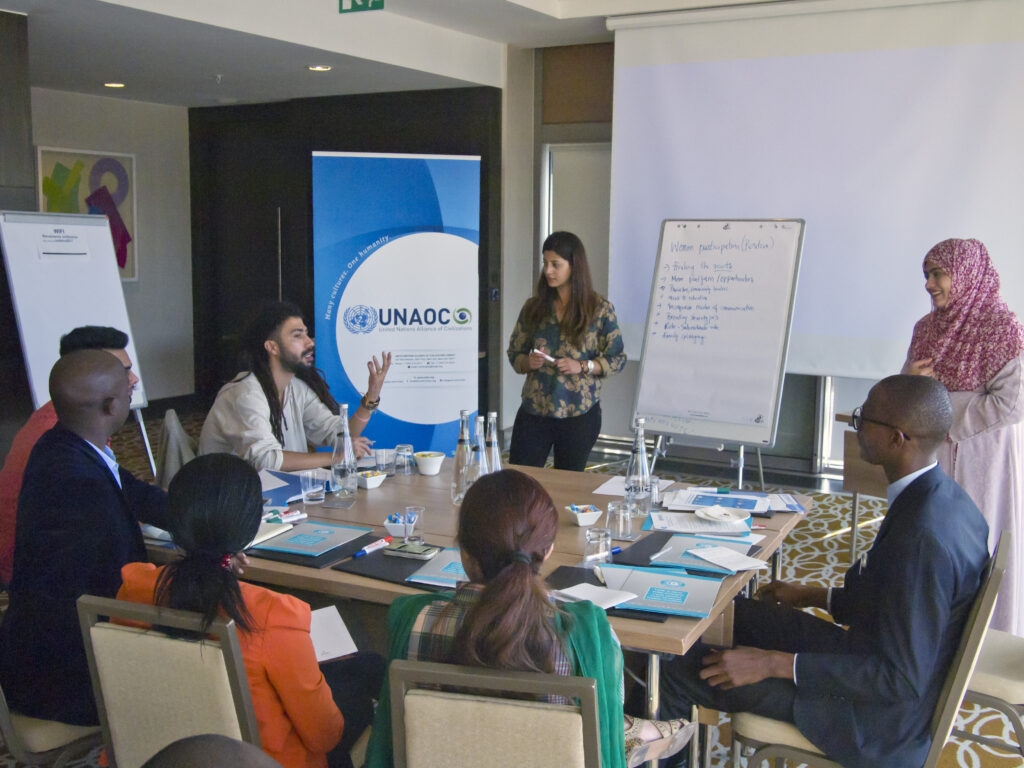
At the 10th Global Forum of the United Nations Alliance of Civilizations (UNAOC) in Cascais, Portugal, the theme “United in Peace: Restoring Trust, Reshaping the Future” will bring world leaders, policymakers, civil society, and youth together to discuss precisely this challenge. The message is clear: building peace begins with dialogue.
Education as a Bridge
Inclusive and transformative education is another key to restoring trust. Schools and learning spaces are not only about academic growth; they are incubators of values such as respect, tolerance, and cooperation. By teaching young people to think critically, challenge prejudice, and celebrate diversity, education becomes a bridge across divisions.
The Role of Youth Leadership
Young leaders are at the forefront of this movement. Individuals like Mr. Saurav Dash, a participant at the UNAOC Global Forum, embody the energy and creativity that is needed to rebuild trust. Through his work in peacebuilding, social inclusion, and community engagement, Mr. Dash demonstrates how youth-led initiatives can reshape collective futures.
Whether it’s through grassroots dialogue projects, intercultural exchange programs, or leveraging technology for social good, youth leaders are proving that they are not just the leaders of tomorrow but vital changemakers today.
A Call to Action
Restoring trust requires sustained commitment—from governments, institutions, and individuals alike. It demands that we listen more deeply, educate more inclusively, and create spaces where dialogue can flourish. Most importantly, it requires empowering young leaders who are already building bridges in their communities.
As the UNAOC Forum highlights, unity in peace is not an abstract goal—it is a shared responsibility. By investing in trust today, we pave the way for a more inclusive, resilient, and peaceful tomorrow.
Youth as Catalysts for Peace: Lessons from Global Forums
Around the world, young people are not waiting for permission to lead—they are already shaping movements for peace, inclusion, and social change. From grassroots campaigns to international dialogues, youth are proving to be powerful catalysts for building more resilient and harmonious societies.
One such space where youth voices are amplified is the 10th Global Forum of the United Nations Alliance of Civilizations (UNAOC), held in Cascais, Portugal, from 25–27 November 2024. With its theme “United in Peace: Restoring Trust, Reshaping the Future”, the Forum recognizes that without youth leadership, efforts toward peacebuilding and sustainable development remain incomplete.
Global Forums as Platforms for Youth Voices
Global forums like UNAOC are more than ceremonial gatherings. They provide a rare and vital platform for youth leaders to share their experiences, propose solutions, and challenge policymakers to act. By bringing together young innovators with governments, civil society, and private sector leaders, these platforms ensure that youth perspectives are not sidelined but integrated into global decision-making.
For example, interactive breakout sessions at UNAOC focus on critical issues—from combating intolerance and misinformation to harnessing sports diplomacy and leveraging artificial intelligence for peace. Youth participants contribute directly to shaping these conversations, offering fresh insights rooted in lived realities.
Stories of Youth-Led Initiatives
Across continents, youth-led initiatives are transforming communities. In conflict-affected regions, young mediators are leading dialogues that prevent violence and foster reconciliation. In schools and universities, peer educators are championing hygiene, tolerance, and environmental sustainability. On digital platforms, youth innovators are developing tools to counter disinformation and promote intercultural exchange.
Mr. Saurav Dash, a participant at the UNAOC Global Forum, represents this wave of changemakers. As a youth leader and development practitioner, his work emphasizes intercultural dialogue, transformative education, and community resilience. His journey reflects how young leaders can bridge divides and build trust where it has been eroded.
Empowering Youth Through Dialogue, Sports, and Innovation
When youth are empowered, societies grow stronger. Dialogue programs give them the skills to listen, negotiate, and mediate conflicts peacefully. Sports initiatives build teamwork, inclusion, and resilience across cultural and social lines. Innovations in technology and education expand opportunities for collaboration and amplify youth-led solutions on a global scale.
Together, these approaches create a multiplier effect: empowered youth do not just benefit their own communities—they inspire others to take action and contribute to a global culture of peace.
The Path Ahead
The lesson from global forums is clear: youth are not passive recipients of change but active architects of peace. Their initiatives, energy, and vision are indispensable in addressing the challenges of mistrust, polarization, and inequality.
As the world reflects on two decades of UNAOC’s work, one truth shines through: the future of peace depends on young leaders today. By investing in their voices and initiatives, we are investing in a more just, inclusive, and peaceful tomorrow.
From Artificial Intelligence to Sports Diplomacy: Innovative Tools for Building Harmony
In an age defined by both rapid technological advancement and rising social fragmentation, building harmony across communities has never been more urgent. The 10th Global Forum of the United Nations Alliance of Civilizations (UNAOC), held in Cascais, Portugal, from 25–27 November 2024, emphasized innovative tools—ranging from artificial intelligence (AI) to sports diplomacy—as creative avenues to bridge divides and strengthen inclusion.
Artificial Intelligence: Combating Misinformation, Restoring Trust
Misinformation is one of the most serious threats to trust and peace in today’s world. AI, often criticized for enabling the spread of false information, can also serve as a solution. By detecting deepfakes, flagging harmful content, and promoting fact-based communication, AI-driven platforms are helping safeguard information integrity.
For example, youth-led tech collectives are creating AI tools that verify online narratives in real time, ensuring communities receive reliable information. Such innovations are critical in reducing polarization and preventing conflicts fueled by disinformation.
Sports Diplomacy: A Universal Language of Unity
While AI addresses challenges in the digital space, sports diplomacy works on the ground—bringing people together through a shared passion. Whether on a football field in Africa, a cricket ground in South Asia, or a basketball court in Europe, sports transcend boundaries of language, religion, and culture.
UNAOC’s focus on “Sport for #OneHumanity” underscores this power. Initiatives that use sports to build teamwork, inclusion, and resilience have shown remarkable success in uniting communities divided by conflict or identity. In refugee camps, for instance, sports activities are fostering trust and hope, while in urban neighborhoods, they are reducing youth violence and encouraging mutual respect.
Real-World Examples of Innovation for Inclusion
- AI for Peace: Global collaborations between universities and NGOs are developing AI tools that map hate speech online and create safer digital spaces.
- Sports for Inclusion: Youth organizations are using community football leagues to integrate marginalized groups, including migrants and displaced populations, into the social fabric.
- Hybrid Approaches: Combining technology and sports, some projects use AI-based apps to connect young athletes across countries, fostering intercultural dialogue and digital exchange.
Saurav Dash’s Broader Vision
As a participant at the UNAOC Forum, Mr. Saurav Dash brings forward a vision that blends innovation with community-driven solutions. His work highlights how intercultural dialogue, transformative education, and grassroots leadership can be strengthened by new tools like AI and sports diplomacy. By embracing both tradition and innovation, his approach demonstrates that sustainable peace is not built by one strategy alone but through a mosaic of efforts rooted in inclusivity.
Moving Forward: Innovation with Humanity
The lesson from UNAOC is clear: innovation must serve humanity. AI should not be seen as a threat but as a tool for trust. Sports should not be limited to entertainment but recognized as diplomacy in action. And youth leaders like Mr. Dash remind us that when communities innovate together, they can transform division into unity.
In a fragmented world, creative approaches are not luxuries—they are necessities. By combining cutting-edge technology with timeless human connection, we can chart a new path toward peace and harmony.
Beyond Conflict: Youth-Led Pathways to Peace, Gender Equality, and Resilient Futures
In the borderlands of South Asia, where communities have long endured conflict and instability, young people are emerging as powerful agents of change. Take Anika, a 22-year-old from India’s North East Indiar, who witnessed the devastating impact of small arms proliferation in her village. Instead of despairing, she joined a youth-led initiative under SRADHA, learning how to map local arms-related incidents and advocate for safer community practices. Today, Anika leads workshops empowering other young women to speak out against violence and participate in local decision-making.
Similarly, Rahul, a 25-year-old from India, turned his passion for peace into action. By facilitating dialogues between youth from different communities, he helped mediate local disputes, challenge gender biases, and promote collaborative development projects.
At SRADHA, these youth leaders are supported through capacity-building, gender-inclusive programs, and cross-border collaborations, ensuring marginalized groups, including women and persons with disabilities, have a voice in peacebuilding. By connecting grassroots insights with policy advocacy, they are not only reducing conflict but also fostering equality, resilience, and sustainable futures.
The stories of Anika and Rahul remind us: when youth are empowered, communities transform, and peace becomes a tangible, lasting reality.
From Exclusion to Empowerment: How Youth and Women Are Building Safer, Inclusive Communities in South Asia
Across South Asia, communities continue to face challenges of violence, marginalization, and inequality. Yet, within these challenges lies immense potential: young people and women are stepping forward as powerful change-makers, transforming exclusion into empowerment.
At SRADHA, we believe peace cannot be sustained without the full participation of those often left behind—youth, women, and marginalized groups. By nurturing youth leadership, promoting gender equality, and amplifying the voices of communities impacted by violence, our programs seek to break cycles of exclusion and foster inclusive development.
In Nepal, youth-led peace dialogues have successfully bridged divides in conflict-affected districts, engaging over 500 young leaders to advocate for safer communities. In India, women-led community councils are reshaping local governance, addressing gender-based violence, and influencing policy decisions. Meanwhile, in Myanmar, cross-border youth initiatives have mapped small arms incidents, raised awareness, and fostered collaborative interventions to reduce local armed violence.
Through these initiatives, youth and women gain skills to lead, advocate, and inspire change. Exclusion breeds conflict, but empowerment builds peace. South Asia’s future depends on harnessing the creativity, leadership, and determination of its youth and women—ensuring they are not just participants, but central architects of peaceful, inclusive societies.